

Our client is a Swedish digital services company that works with clients across Europe and North America. They had revenues coming in from both project-based and recurring contracts. They were scaling, but with so many different currencies, their team was struggling to keep their financial operations under control.
Their income was from multiple channels like Stripe, Wise, and bank transfers, and every transaction was in 3 different currencies: CHF, USD, and EUR. Since their financial tracking was done through spreadsheets, it became harder for their financial team to track team costs and forecast cashflow.
While their financial management wasn’t broken, they were outgrowing their current tools. They wanted more structure, clarity, and visibility into how their finances were managed. They reached out to us for a better, transparent financial system where everything was tracked in one place.
Income and expenses were logged in CHF, USD, and EUR. The team used a mix of spreadsheets and reports to track exchange rates and normalize data—but this became harder to maintain as transaction volume grew.
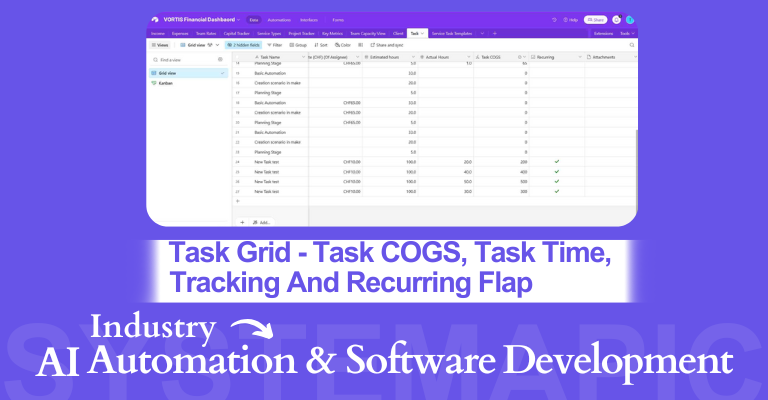
They had contract values, team rates, and expense logs, but no way to see how profitable a service or project was. This made planning and pricing less data-driven than they preferred.
Recurring projects, client invoicing, credit card charges, and pipeline forecasting were being handled in different places. Without a connected view, it took time to gather insights and prepare reporting.
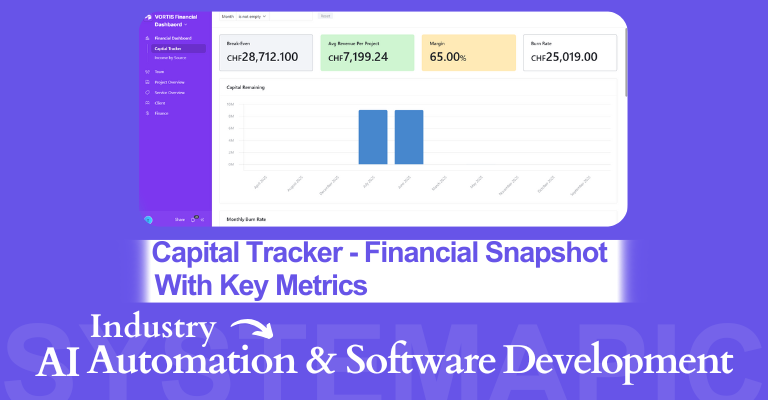
They wanted a system that could help them project cashflow, team costs, and upcoming revenue from active and pipeline projects.
“We weren’t flying blind. But we were spending time stitching together the same reports every month, and still felt like we were missing a full picture.”
We designed and implemented a custom Financial Operating System in Airtable, tailored to the way their business runs.
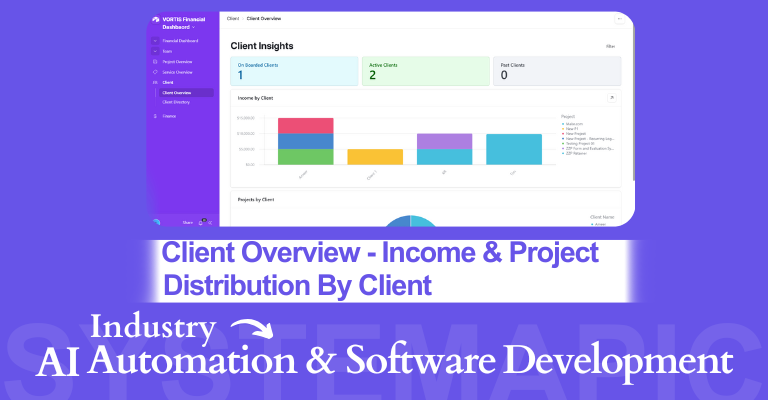
We brought together income (Stripe, Wise, bank), expenses (credit card + SaaS), and invoice tracking into one structured system. All values are normalized to CHF, with exchange rate fields included per transaction.
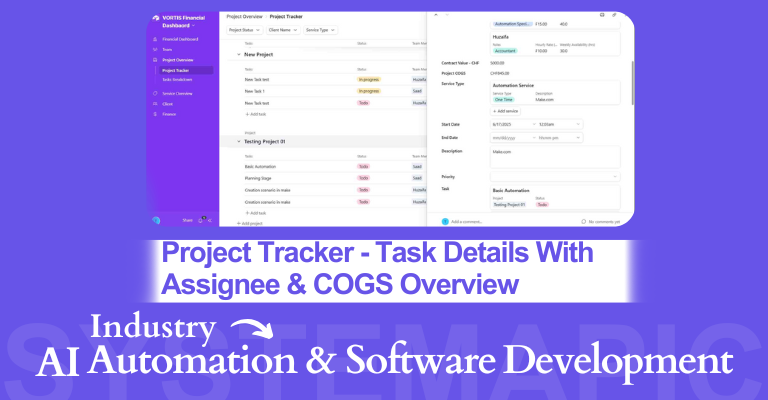
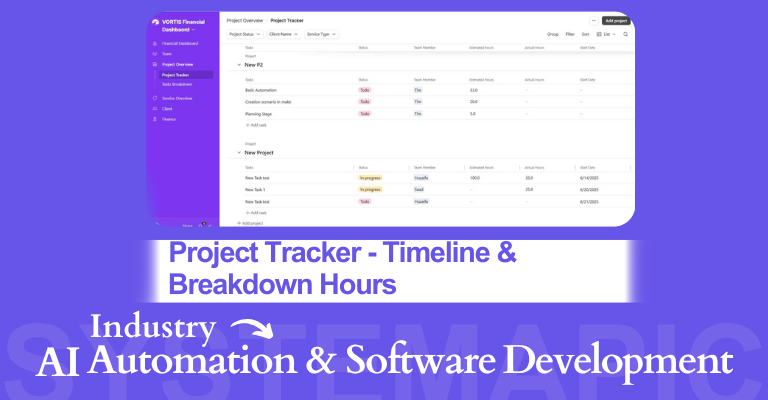
Each project and service type now connects to:
This made it easy to spot which services were driving profitability—and which ones weren’t.
We built:
We added a custom tracker for card transactions, with vendor, date, category, currency, and exchange rate—creating a clean link between charges and cost centers.
We scoped the system to allow later integrations with:

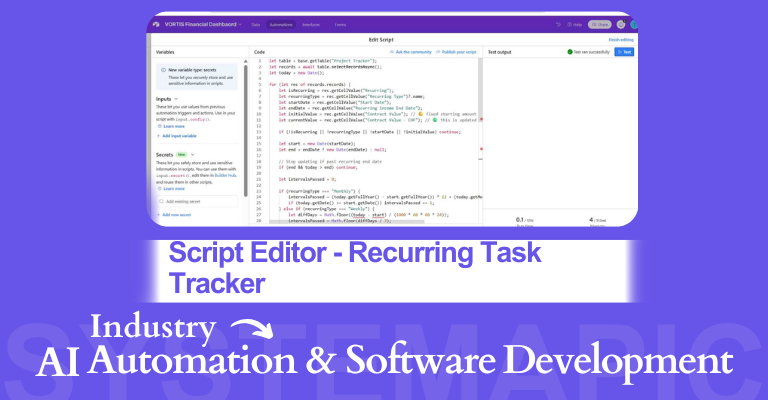
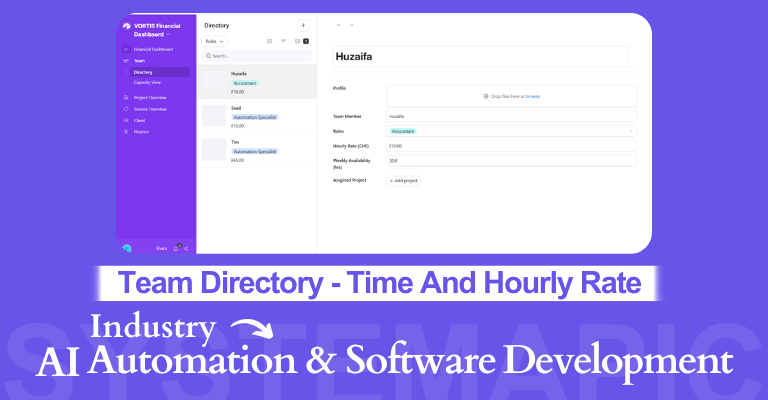
Financial operations get complex fast when income, expenses, and currencies live in different places. A connected system gives you clarity today and forecasts you can trust for tomorrow.